AI for Dual-Income Couples: Split Household Work Fairly
When both partners work full time, household management becomes a second job. AI can take it off both your plates instead of keeping score.
The beta is open — hand this off to Jipsa. Free to start, no card required.
Sign Up for BetaBoth of you work. Both of you are tired. And somehow the dishwasher still needs unloading, dinner still needs deciding, and the electricity bill is three days overdue. Splitting household work fairly as a dual-income couple is one of the most common sources of friction in modern relationships — and AI for dual-income couples offers a way out that does not involve spreadsheets or arguments.
The Scorecard Trap
Most couples who try to divide household labor fairly end up keeping score. You did the dishes, so they should do the laundry. You planned last weekend, so they should plan this one. It sounds reasonable. In practice, it breeds resentment.
The problem is not that one person does more. The problem is that household management is invisible work. The person who notices the toilet paper is running low, remembers the dog's vet appointment, and tracks when the kids need new shoes is doing enormous work that never shows up on any scorecard.
You cannot split invisible work fairly because you cannot see it to divide it.
Why Task-Splitting Fails
Dividing tasks — "you handle meals, I handle finances" — seems like a clean solution. But it creates silos. The meal-planning partner does not know what the finance partner spent on groceries. The finance partner does not know what ingredients are already in the pantry. Information stays trapped in individual heads, and coordination becomes another task on top of the tasks.
Worse, when one partner's domain gets complicated (a home repair, a sick kid, tax season), the other partner cannot easily step in because they lack the context. The system is fragile because it depends on both people maintaining their halves perfectly, indefinitely.
The Third Option: Neither of You Does It
What if instead of splitting household management, you offloaded it?
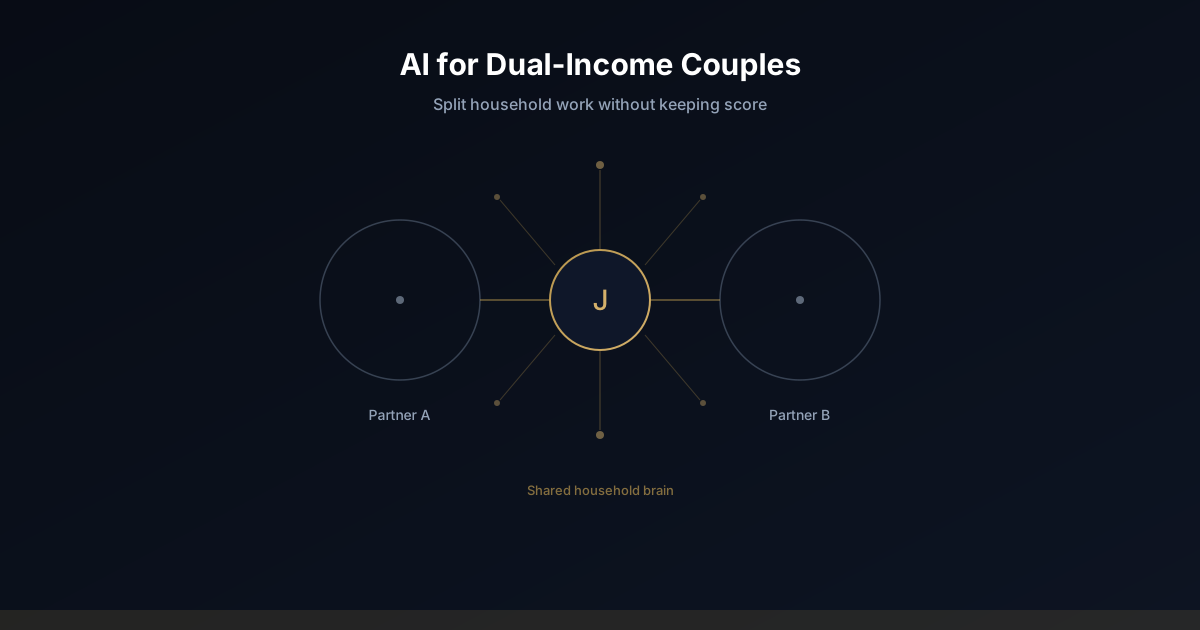
This is the premise behind using a personal AI butler as a couple. Instead of dividing who tracks bills, who plans meals, who remembers appointments, and who monitors the pantry — you give all of it to a shared system that both of you can access equally.
Jipsa becomes the household brain. Either partner can ask what is for dinner, what bills are due, what the weekend looks like, or when the car needs service. Nobody has to be the keeper of household knowledge. Nobody has to be the manager.
What This Looks Like in Practice
Morning: Jipsa's daily briefing tells both of you what is happening today — appointments, tasks, meal plan. No morning negotiation about who is doing what.
Grocery shopping: The pantry is tracked. The grocery list is generated. Whoever has time grabs it — no coordination meeting required.
Bills and subscriptions: Both partners have visibility into household finances. Nothing is hidden in one person's email or bank app. Jipsa tracks due dates and flags anomalies.
Meal planning: Meals are planned based on what you have, what you like, and your schedule. No more "what's for dinner" standoff at 6 PM.
Home maintenance: Seasonal tasks, filter replacements, appliance servicing — tracked and surfaced without either partner having to be the house manager.
Equity Without the Spreadsheet
The real goal is not a perfectly balanced chore chart. It is equity — the feeling that neither person is carrying the household alone.
AI achieves this not by dividing labor but by reducing it. When the system handles tracking, planning, and reminding, there is simply less work to divide. The arguments about who forgot to schedule the vet appointment disappear because nobody needs to remember — the system does.
This is particularly powerful for the partner who has been carrying the mental load. Often one person (research consistently shows it trends toward women in heterosexual couples) holds the household's operating context in their head. They know what needs to happen and when. Offloading that to AI is not just convenient — it is liberating.
Common Pushback
"We should be able to handle this ourselves." You can. You are also capable of washing dishes by hand, doing math without a calculator, and navigating without GPS. The question is not capability — it is whether this is the best use of your finite energy.
"AI feels impersonal for something so personal." The personal part of a relationship is the connection, not the chore management. If anything, removing the friction of household logistics creates more space for the personal.
"What if one partner does not want to use it?" Jipsa works through natural conversation. There is no app to learn, no system to maintain. If one partner is skeptical, they can simply ask a question and see what happens. Adoption follows utility.
The Relationship ROI
Couples who fight about household responsibilities are not fighting about dishes. They are fighting about fairness, respect, and feeling seen. These are relationship problems dressed up as logistics problems.
Solving the logistics will not fix a broken relationship. But removing a constant source of friction — who does what, who forgot what, who carries more — gives you back the energy to invest in each other instead of in household management.
Start With One Thing
You do not have to overhaul your entire household overnight. Start with the area that causes the most friction. For most dual-income couples, that is either meal planning or bill management.
Tell Jipsa about it. Let it handle that one domain for two weeks. Notice how the arguments about that topic quietly disappear. Then expand from there.
Ready to stop keeping score? Jipsa manages the household so you can focus on each other.
Let Jipsa handle it for you
The beta is open. Create your account and hand off the logistics of everyday life — free to start, no card required.
Sign Up for BetaFree Download
The AI Home Management Checklist
42 tasks AI can handle for your household — from meal planning to home maintenance. See exactly what to automate first.