AI and Work-Life Balance: Stop Bringing the Household to Work with You
Work-life balance fails not because of long hours but because household management competes with cognitive focus all day. AI handles the life side so the balance becomes possible.
The beta is open — hand this off to Jipsa. Free to start, no card required.
Sign Up for BetaThe conventional advice on work-life balance is about boundaries: leave the office at 6pm, do not check email on weekends, protect your evenings. Good advice. Entirely incomplete.
The problem is not that work spills into life — it is that life continuously spills into work. The dentist appointment you need to schedule. The grocery order you forgot. The subscription that renewed at the wrong price. The water filter reminder you have been dismissing for three weeks.
AI and work-life balance are connected in a way most discussions miss: it is not just about working fewer hours. It is about clearing the household layer from your cognitive stack during work hours so you can actually be present on both sides of the divide.
The Cognitive Presence Problem
You can be physically home and mentally at work. You can also be physically at work and mentally managing your household — running through the grocery list, planning dinner, remembering the car appointment, calculating when the quarterly insurance payment hits.
That mental background noise is the real work-life balance problem for most professionals. The divide is not a time issue but a cognitive one. When household logistics are unresolved, they surface constantly — during meetings, during focused work, during the moments you are supposed to be resting.
The research on cognitive load is clear: unfinished tasks command attention even when you are not actively working on them. The Zeigarnik effect explains why the undone grocery order nags at you during your 10am call. Your brain keeps an open loop for every unresolved item until you close it.
AI that handles household management closes those loops automatically. When the grocery order is handled, the meal plan is set, and the maintenance reminder is scheduled, the background noise quiets. Work hours become genuinely work hours.
What "Life Management" Actually Includes
The life side of work-life balance is more operationally demanding than most balance discussions acknowledge:
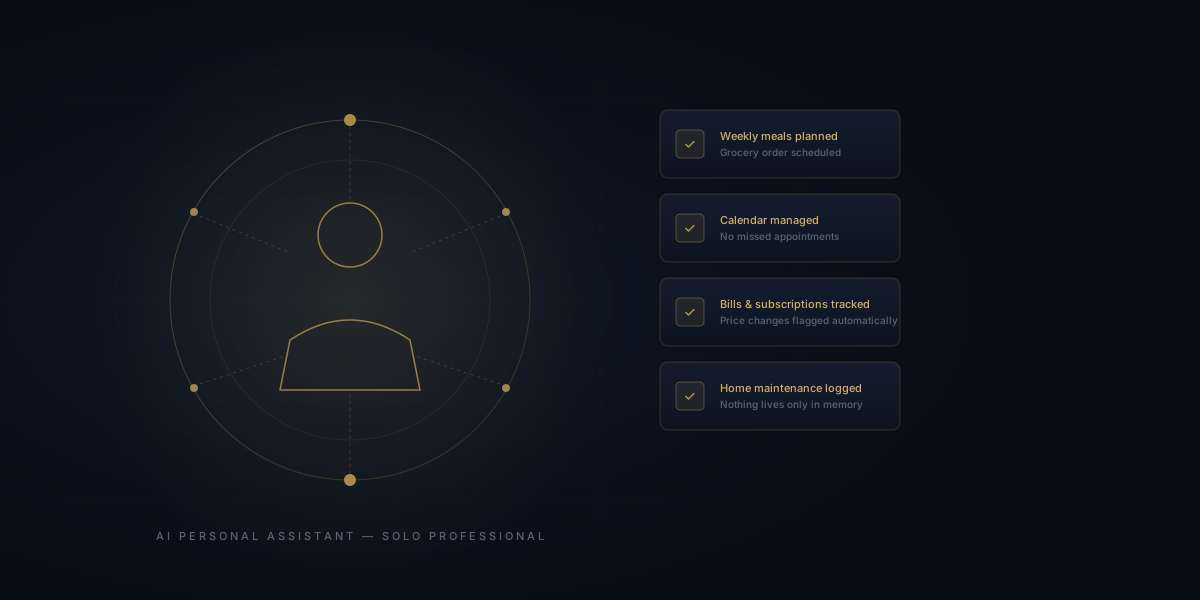
- Meal planning and grocery management: at minimum 3-5 decisions per day, plus weekly planning overhead
- Financial management: subscriptions, bills, renewals, price changes — a continuous monitoring function
- Home maintenance: scheduling, tracking, seasonal checklist management
- Calendar management: appointments, deliveries, service windows coordinated with the work calendar
- The invisible logistics of a running household: pantry management, supply tracking, timing
This is not occasional administrative work. It is a continuous, low-grade operational load that runs in parallel with professional responsibilities. Most people manage it through a combination of willpower, memory, and periodic crisis response — not through any system.
How AI Changes the Balance
Jipsa handles the household operational layer autonomously. The practical effect on work-life balance:
During work hours: The household is running. The grocery order is placed. The maintenance is scheduled. The subscriptions are tracked. None of that requires your active attention because Jipsa has it. The cognitive loops are closed.
After work hours: You are not catching up on household management. The morning briefing surfaces what actually needs your attention — not everything, just the relevant things — so you can make genuinely restful decisions about how to spend your time.
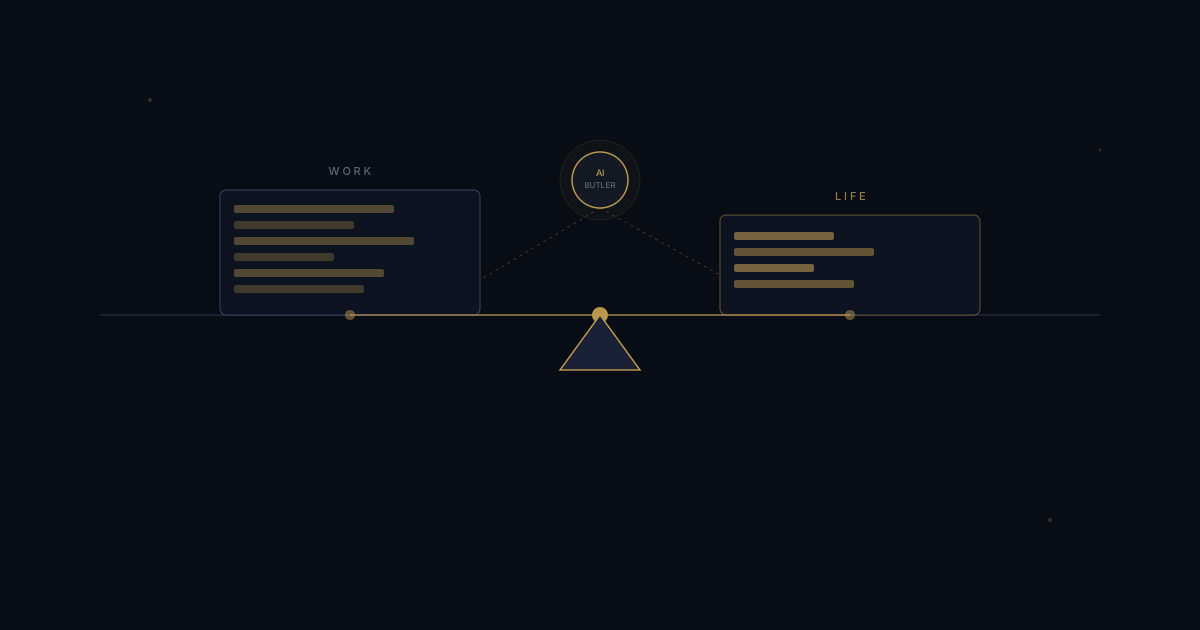
The mental shift: When you trust that the household is handled, you stop monitoring it. You stop running background processes on groceries during meetings. You stop thinking about the plumber while you are trying to be present at dinner. The balance becomes possible because the two domains are no longer competing for the same cognitive resources.
This is not about doing less. It is about removing the category of tasks that do not require your expertise or your attention and handing them to a system that handles them without your active involvement.
Why Balance Frameworks Do Not Fix This
Time blocking, evening routines, weekend shutdowns — standard work-life balance advice addresses schedule management. It does not address the cognitive overhead of household logistics that persists regardless of schedule.
You can commit to not checking Slack after 7pm. You cannot stop thinking about the empty refrigerator at 7:05pm unless someone handles the refrigerator problem.
The people who genuinely achieve work-life presence — not just the appearance of it — typically have one of two things: a partner who manages the household operations, or the financial resources to hire household management. AI personal assistants like Jipsa are the accessible version of the second option.
The Daily Shape of AI-Supported Balance
The morning: Jipsa's briefing tells you what the day holds — the meetings, the tasks, the household events. You do not scan five apps. You get one clear picture and move on.
During the day: the household runs. Grocery is handled. Maintenance is scheduled. Subscriptions are tracked. None of it interrupts your work.
The evening: dinner exists because it was planned. The household is not waiting for you to catch up with it. You are not a project manager reviewing an overdue task queue — you are home.
That is what AI-supported work-life balance actually looks like. Not a rigid schedule. Not digital boundaries. A system that handles the domestic operations so the cognitive divide between work and life can actually close.
Start using Jipsa free and close the loops that are following you into your workday.
Related: How AI handles the mental load and replacing your to-do list with AI.
Let Jipsa handle it for you
The beta is open. Create your account and hand off the logistics of everyday life — free to start, no card required.
Sign Up for BetaFree Download
The AI Home Management Checklist
42 tasks AI can handle for your household — from meal planning to home maintenance. See exactly what to automate first.