The Future of Smart Homes Isn't Hardware — It's Intelligence
The real smart home revolution is AI orchestration — software that thinks, plans, and acts across every service you use. Hardware was just the beginning.
The beta is open — hand this off to Jipsa. Free to start, no card required.
Sign Up for BetaWe Have Smart Devices. We Do Not Have Smart Homes.
Over the past decade, the smart home industry has sold us an appealing vision: a home that responds to your needs, anticipates your preferences, and runs itself. The reality? Most people have a collection of disconnected gadgets that each require their own app, their own setup, and their own maintenance.
You can ask your smart speaker to turn off the lights. You can set your thermostat on a schedule. You can watch your doorbell camera from your phone. But none of these devices talk to each other in any meaningful way. They are individually smart but collectively dumb — a problem explored in depth in why your smart home still feels dumb.
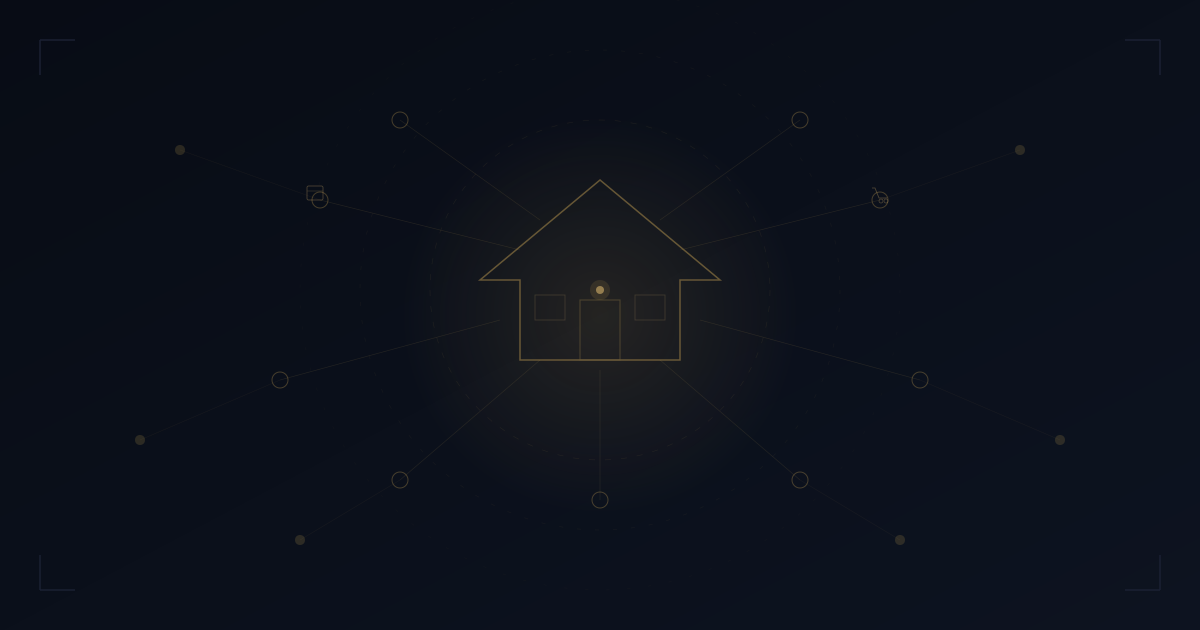
The future of smart homes is not another piece of hardware. It is intelligence — AI that orchestrates your entire home and life from a single layer of understanding.
The Hardware Trap
The consumer electronics industry has spent billions convincing us that the path to a smarter home runs through Best Buy. Buy this smart plug. Install that smart lock. Upgrade to a Wi-Fi-enabled refrigerator.
But more hardware creates more complexity, not less. The average smart home owner uses four or more separate apps to control their devices. Each device has its own ecosystem, its own update cycle, and its own limitations. Integration between brands is fragile at best and nonexistent at worst.
This is the hardware trap: the belief that intelligence lives in the device. It does not. A smart thermostat is just a thermostat with a Wi-Fi chip. The intelligence needs to live above the device layer — in software that understands context, learns preferences, and coordinates actions across your entire life.
What AI Home Automation Actually Means
True AI home automation goes far beyond voice-controlled light switches. It means having an intelligent layer that:
Understands Context
An intelligent home knows that when you say "I am having friends over Saturday," that means adjusting the grocery order, suggesting a playlist, checking restaurant reservation availability as a backup, blocking the evening on your calendar, and perhaps adjusting the thermostat for extra guests.
A smart speaker turns on lights. An AI butler plans your evening.
Learns Patterns
Over time, an AI system learns your routines without being explicitly programmed. It notices that you always order groceries on Sunday, that you prefer Mediterranean food on weeknights, that your family goes out every other Friday. It uses these patterns to anticipate needs rather than just respond to commands.
Coordinates Services
This is the critical piece that hardware alone cannot deliver. The real value of smart home AI is its ability to act as a central coordinator across services that were never designed to work together.
Your calendar, your grocery delivery, your restaurant reservations, your meal plans, your recurring tasks — these all live in separate silos. AI orchestration connects them into a coherent system where actions in one domain automatically trigger appropriate responses in others.
Cancel dinner plans? The AI adjusts the grocery list and suggests a home-cooked alternative. Kid has a snow day? The AI reschedules your morning and suggests activities based on weather and what is available nearby.
The Three Layers of a Truly Smart Home
To understand where the industry is heading, think of the smart home as three layers:
Layer 1: Devices (We Have This)
Connected hardware — thermostats, cameras, locks, speakers, appliances. This layer is mature. The devices work. The problem was never the hardware.
Layer 2: Automation Rules (We Are Here)
Simple if-then logic. If motion is detected, turn on the lights. If the temperature drops below 68, turn on the heat. If I leave home, lock the door. Platforms like IFTTT and HomeKit operate at this layer.
This is better than manual control, but it is rigid. Rules do not adapt to changing circumstances. They do not understand nuance. They break when life gets unpredictable — which is always.
Layer 3: Intelligence (Where We Need to Be)
AI that understands intent, context, and preference. It does not follow rules — it makes decisions. It does not wait for commands — it anticipates needs. It does not control one device — it coordinates your entire domestic life.
This is the layer that transforms a house full of gadgets into a genuinely intelligent home. And this is the layer that is finally becoming possible thanks to advances in large language models, API ecosystems, and agentic AI.
Why Software Eats Smart Home Hardware
The most valuable part of any smart home will increasingly be the intelligence layer, not the devices themselves. Here is why:
Hardware commoditizes. Intelligence differentiates. A thermostat is a thermostat. The value is in the AI that decides what temperature to set based on your schedule, the weather, energy prices, and whether you are hosting guests.
Software improves continuously. Your smart plug will never get better. But an AI assistant gets smarter every week through model improvements, new integrations, and learned preferences.
Integration happens in software. No hardware manufacturer will ever integrate with every other hardware manufacturer. But an AI layer that connects to APIs can coordinate across any service, regardless of brand.
The interface becomes invisible. The best smart home is one you never have to think about. You do not open apps or press buttons. You simply live your life, and the AI handles the logistics behind the scenes. That requires intelligence, not hardware.
What This Means for Homeowners Today
You do not need to wait for the future. The intelligent home layer is available now — not through another gadget, but through AI assistants that connect to the services powering your daily life.
Think about the services you already use:
- Grocery delivery (Amazon Fresh, Instacart)
- Restaurant reservations (OpenTable)
- Calendar management (Google Calendar, Apple Calendar)
- Task management (Todoist, Reminders)
- Food and recipes (your own preferences and dietary needs)
An AI butler that connects these services and acts on your behalf is the intelligence layer your home has been missing. It does not require new hardware. It does not require rewiring your house. It works with what you already have.
Jipsa: The Intelligence Layer for Your Life
Jipsa is built on this exact philosophy. Rather than selling you another device, Jipsa provides the AI orchestration layer that connects your existing services and makes them work together intelligently.
Tell Jipsa you want to host a dinner party. It checks your calendar for availability, suggests a menu based on your guests' dietary preferences, orders the groceries through Amazon Fresh, and reserves a backup restaurant through OpenTable in case plans change. One request, multiple services, zero friction.
This is what a smart home was always supposed to be. Not a collection of gadgets — a layer of intelligence that makes your entire life run more smoothly.
The future of the smart home is not in your walls. It is in the AI that connects everything together. Discover what Jipsa can do for your home today.
Let Jipsa handle it for you
The beta is open. Create your account and hand off the logistics of everyday life — free to start, no card required.
Sign Up for BetaFree Download
The AI Home Management Checklist
42 tasks AI can handle for your household — from meal planning to home maintenance. See exactly what to automate first.